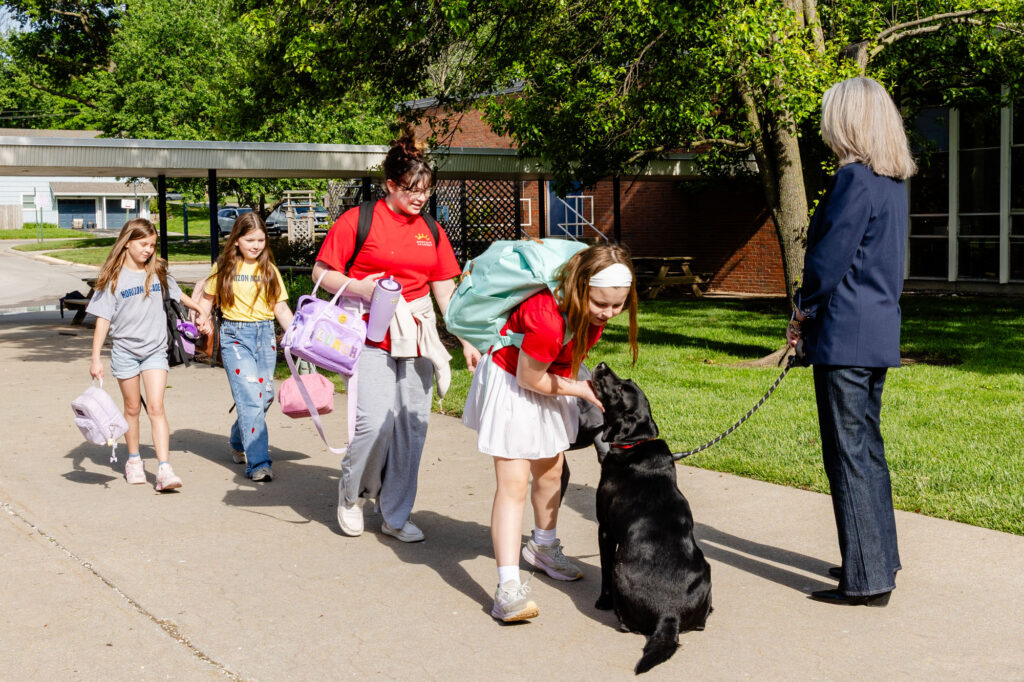
Horizon Academy focuses on educating students with dyslexia and other language-based learning disabilities. Rather than adding supplemental instruction to a traditional classroom model, we’ve built every aspect of our school around how students with dyslexia learn best. Our programs incorporate the Orton-Gillingham Approach, Multisensory Math Approach, The Writing Revolution, and executive function skill development to help students build confidence and independence.
Dyslexia School Questions
Frequently Asked Questions
Students considered for admission have a primary diagnosis of dyslexia, dysgraphia, and/or dyscalculia. Our environment is designed for learners who benefit from specialized instruction in small groups and who can participate independently within a classroom.
Yes. While Horizon Academy is not equipped for students whose primary needs are behavioral or emotional in nature, many students experience school-related anxiety. Families often find that anxiety decreases as students receive support and experience success in the classroom.
Prospective students participate in a 1-hour screening visit that includes a brief academic assessment in reading, writing, spelling, and math. This helps the admissions committee better understand a student’s current skills and learning profile. No special preparation is required beyond arriving ready to participate.
Once all reports are submitted and the student has been screened, families typically hear from the admissions committee within 1 to 2 business days. Depending on the student’s needs, next steps may include a formal application invitation, additional testing recommendations, summer program participation, or a shadow visit.
Because every learner’s journey is different, enrollment timelines vary. Many students attend for 3 to 4 years, with 3 years being the average stay, before transitioning back to a traditional school environment or another educational setting.
Students transition to a variety of public, private, and parochial schools based on their needs. Horizon Academy works closely with families during this process to help identify the best next environment. Graduates and former students have gone on to attend colleges, universities, trade schools, and military programs.
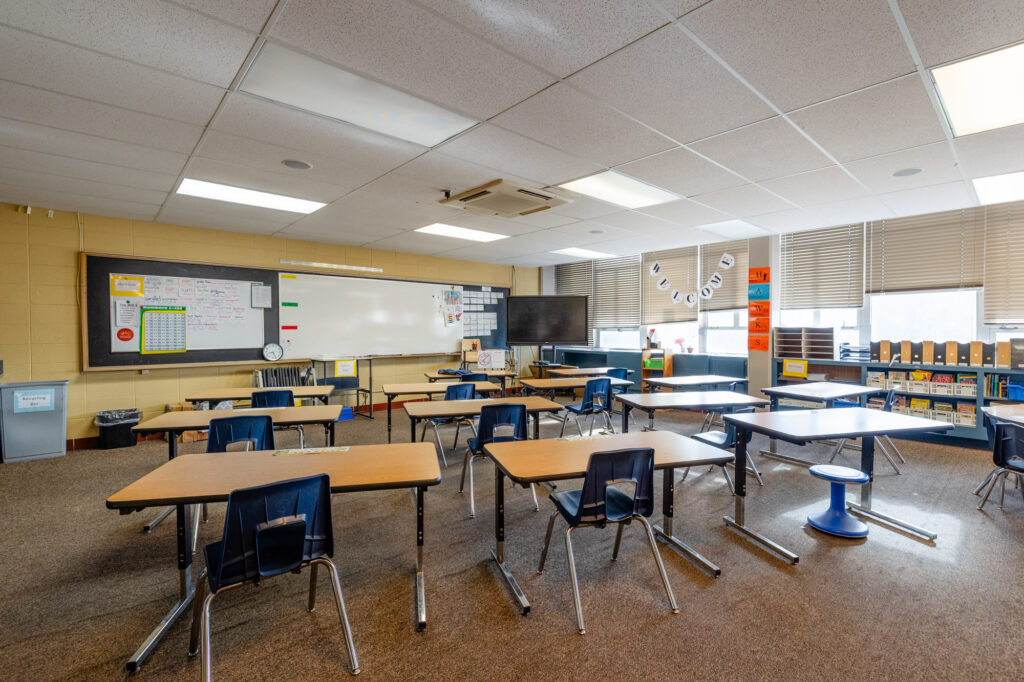
Small-group learning is a hallmark of the Horizon Academy experience. Core academic classes maintain approximately a 4:1 student-to-teacher ratio, while specialized instructional groups are even smaller. This allows teachers to provide individualized support while helping students strengthen their self-advocacy skills.
In addition to remediation, we encourage students to build on their strengths and interests. Our approach allows teachers to tailor learning in math, science, social studies, the arts, and Makerspace to their students, so they are both supported and challenged.
Homework reinforces previously taught skills while building accountability and executive function. Depending on their grade, students complete 30 to 60 minutes of independent work each evening, often focused on reading and math.
While considering the pros and cons of our dyslexia school, questions often arise surrounding assignments, independence, and academic frustration. We’re here to answer them all and adjust your child’s plan as necessary to help them succeed.
Yes. Students can participate in a variety of after-school clubs and activities throughout the year, including art, chess, science, swimming, storytelling, basketball, aerial silks, and homework club. Extended care is also available until 5:00 p.m.
Horizon Academy fosters a close-knit environment where students develop meaningful friendships and families become part of a supportive community. Parents can also participate in the Horizon Academy Parents Association, which strengthens connections through events and volunteer opportunities. Many families with dyslexia school questions find the answers they’re looking for in our extensive community, which is often one of the most important factors in their decision-making process.
Students in the School Year Program wear school-approved uniforms, while summer program participants may wear school-appropriate clothing. Families provide transportation and lunches, though carpool coordination is available.