Dyslexia and School Trauma
Being on the team at Horizon Academy comes with a unique privilege: witnessing students blossom.
It is part of why I love working here. As both a licensed School Counselor and an Associate Member of the Orton-Gillingham Academy (A/OGA), I truly believe that we have the ideal environment for students to learn and heal.
Dyslexia and School Trauma
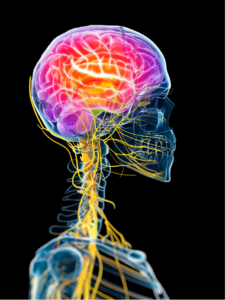
Something parents, educators, and other professionals frequently forget to discuss is the relationships between learning differences, like dyslexia, and school trauma.
The clinical term “trauma” refers to when the human brain is confronted by a stressor that it does not feel equipped to adequately handle. Many of our Horizon Academy students have experienced significant “school trauma” prior to enrolling with us, because many of our school systems are unaware of the importance of structured, sequential, flexible, cognitive and multisensory instruction for students with learning differences.
Our students are truly bright, but the biological basis of their neurodivergence often requires a “re-wiring” of the brain in order to develop the “wiring” of reading that neurotypical students possess intrinsically. This is simply because diversity in the brain’s wiring is a naturally occurring difference. This difference can even be a strength in some areas. Students with dyslexia and other learning differences will need significantly more repetitions to solidify the neural pathways necessary for reading or math to be “automatic”. The experience of “not getting it” when peers may seem to do so easily can feel extremely stressful, and the brain does not differentiate between types of stress.
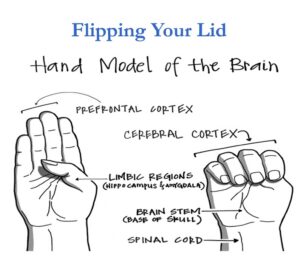
For all intents and purposes, in the brain, all stress is perceived as a matter of life and death. The repeated exposure of this stress response can cause the brain to revert to a “fight, flight, or freeze” mode. This response is an attempt to protect itself in the only way it knows how. Dr. Dan Siegel famously termed this brain reaction as “flipping your lid”. Over time, that “flipped lid” mode can become a person’s baseline, and an individual may appear to be constantly irritable, anxious and/or reactive. The article, “When your Child’s Lid Flips” by Smart Kids with Learning Disabilities to help if you are finding yourself in this situation currently with your child. Parents may notice their children exhibiting these frequent symptoms of “traumatic stress”, in addition to somatic complaints like difficulty concentrating and a seeming lack of motivation.
The Horizon Academy Approach
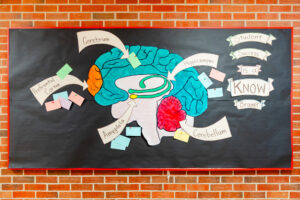
At Horizon Academy, we allow the individual needs of each student to guide their education. Rather than adapting general education, we build learning around structured literacy, multisensory instruction, and executive function development to support how our students learn best.
The Orton-Gillingham and Responsive Classroom approaches both inform how our faculty at Horizon Academy create a safe classroom environment for our students. These strategies overlap in that they are both centered on emotionally sound, structured, explicit instruction in order to build skills. As Responsive Classroom educators, it is our job to foster a true sense of community and collectively contribute to a safe, joyful, and inclusive environment for every student.
Launch class is a weekly “special” taught by School Counselor Katie Martino to do just this. In Launch, students are explicitly taught about how the brain works and the need for autonomy, belonging, and competency. Across our school, students are encouraged to embrace the use of multisensory strategies and repetition as keys to ensuring competency. School counselors provide small group support during lunch as another strategy to build students’ sense of belonging. They also meet individually with students when needed to explicitly teach and reinforce positive self-talk, flexible thinking strategies, and effective self-advocacy.
Other emotionally sound practices offered throughout the school day to provide a sense of autonomy are options to “reset” when students notice that they may have “flipped their lid”, standing desks and fidgets, and requesting quick whole class brain breaks when needed.
This is best practice for all schools, but especially Horizon Academy. So many of our students have struggled with traumatic experiences in their academic past and need intentional instruction to learn and grow.
By Suzanne Welde, School Counselor and Interventionist