By Ethan Minor-Lucht, Horizon Academy Interventionist
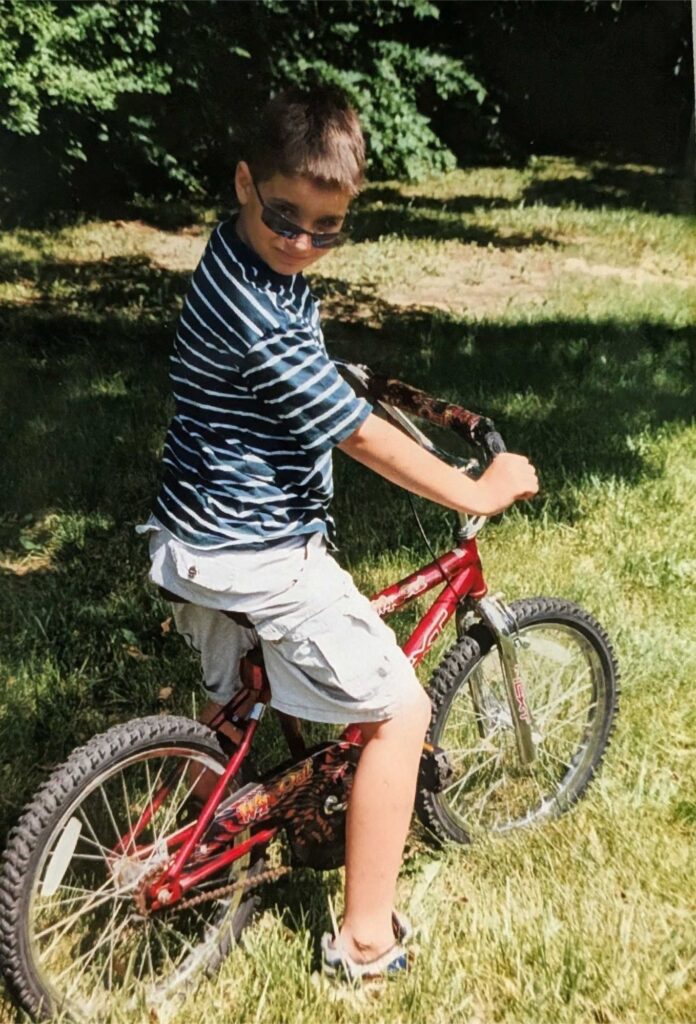
When I was in the 4th grade, I had a really terrific teacher–Mrs. S.
Mrs. S. was one of those teachers who seemed genuinely delighted to see us each day. She took real interest in us. She could listen to her students as someone who is authentically interested in what they had to say, not like another adult who was simply patronizing us. And we could tell the difference. I felt seen, and cared for in Mrs. S.’s class.
My fond memories of Mrs. S.’s class are juxtaposed with a single, lasting negative memory from that school year.
One day, Mrs. S. was absent and we had a substitute. This sub followed a teaching philosophy that was completely different from Mrs. S. After writing sentences in class, this sub sent me to the “Safe Seat” (reset corner), not for disruptive behavior, but because of my penmanship.
“Do you see this?” I remember her pointing to my handwriting, “This is sloppy.”
I can still hear exactly how her voice sounded when she took her time emphasizing the word “sloppy”, speaking it as if it was a curse. The substitute forced me to re-do my assignment with “better handwriting”, something that is still difficult for me to this day. Unsurprisingly, she remained unsatisfied with my second attempt. I remember tears welling in my eyes as she scolded me further for what she assumed, incorrectly, was lazy work from an arrogant fourth grader.
While this incident hurt me as a child, it also reminds me that I was one of the lucky kids. Because, as upsetting and unfair as this felt to my 10-year-old self, this event was one of only a handful of times where I was made to feel stupid or incompetent because of my learning differences during my education. I was so fortunate to have parents and a homeroom teacher, the wonderful Mrs. S., who were both aggrieved by the incident. Mrs. S. went so far as to see that this substitute did not return to her class.
When I reflect on this event now, with about a decade of experience in the education world under my belt, I can find ways to empathize with this substitute. She used the skills and experience at her disposal to try to improve my handwriting. She was under the impression that my poor handwriting was a result of low effort, and not a consequence of a learning disability which I could not control (poor handwriting is a common symptom of both dyslexia and ADHD). She may have held the opinion that “laziness” requires consequences so that children will choose to put in more effort. However, what I always end up coming back to is that, what she may believe to be high expectations actually left my ten-year-old self weeping and ashamed. And shame does not teach the lessons we want for our kids.
The following year, I received an Individualized Education Program, sometimes referred to as an IEP.
One of the chief goals of this IEP was to improve my handwriting. I received handwriting instruction during the day, and the instruction was tailored to the challenges I experienced. The special educators who worked with me did not criticize me for my failures. Instead, they gave me the freedom to slow down when I needed to, working at my own pace. When my homeroom class did spelling tests, I only completed about half the words, because I needed to work slower to focus on both handwriting and spelling. The result was that the work I completed was higher quality, and left a more meaningful impact on me. Eventually, after lots of time and patient practice, I kept pace with my peers.
I’m grateful that I grew up in a family where learning disabilities were not uncommon. There was no stigma around learning differences like ADHD or dyslexia in my family. My grandma was a certified Orton-Gillingham instructor, and provided me with support when I was a reluctant reader and writer.

Instead of experiencing shame over the challenges that made school so difficult, we had memorable conversations where we discussed the things that help each of us learn best. From my grandmother’s and parents’ examples, I became more self-aware and learned not to be ashamed of the trajectory of my education.
The truth is this – kids with learning disabilities face challenges on nearly every front in life. The best thing they can have at home is someone in their corner, who unconditionally accepts them for who they are. They don’t understand what makes academics so difficult for them any more than anyone else does, and no amount of being told to try harder will change that. An ounce of benefit-of-the-doubt is worth more than a gallon of “tough love”.
As a teacher at Horizon Academy, my heart is warmed when I meet the families of my students. These families accept their students for who they are, and are along with their kids for the ride. It’s impossible to predict what the future will look like for the kids in our lives, particularly for kids with learning disabilities, but the love that surrounds them both at home and at school is the best way to guarantee them a happy life when they are grown.