
Reflections after Brilliantly Wired
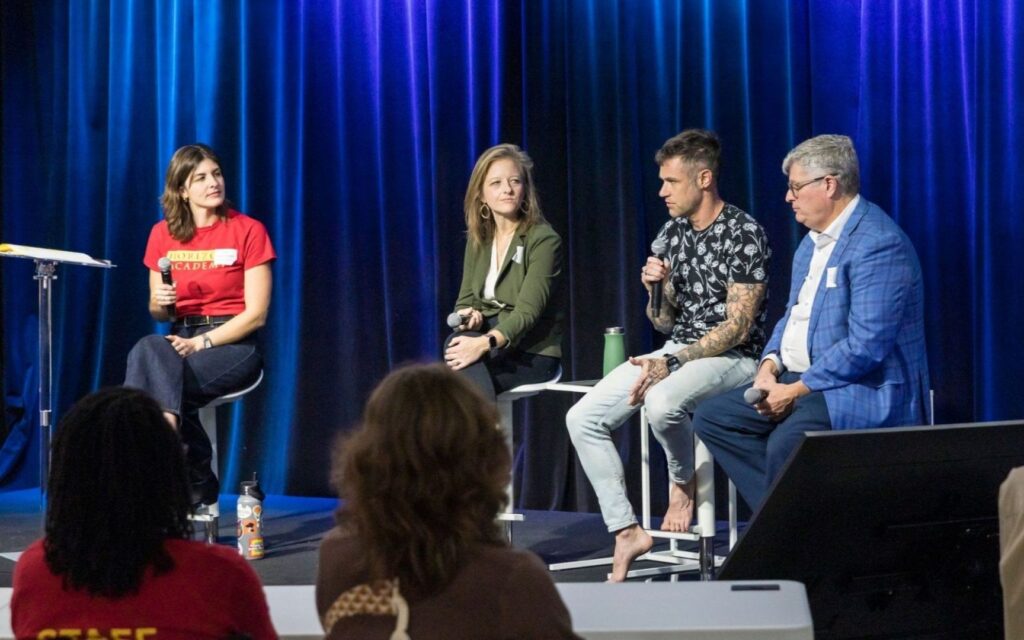
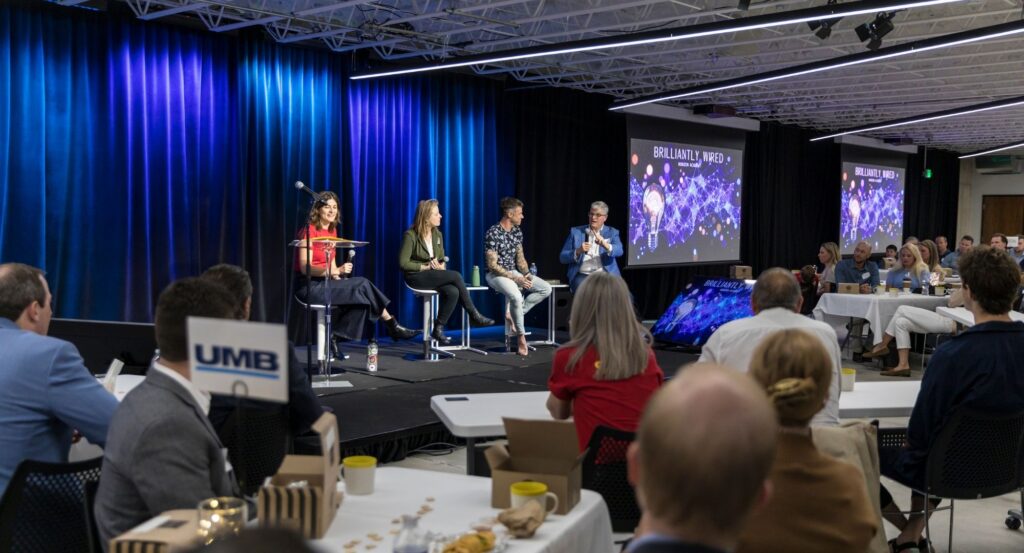
Last week, Horizon Academy hosted Brilliantly Wired, an annual breakfast event where our community learns from a panel of successful Kansas Citians with learning differences. For the past two years, I have had the opportunity to ask these outstanding guests questions about their lives, strengths, challenges, what they’ve learned, and how they built their successful careers while having learning disabilities.
This year, three incredible individuals joined us:
- Tim Meacham, Senior Vice President at Lockton, where he works with organizations and their people.
- Adam Fichman, founder of Lifted Logic, a Kansas City-based digital agency specializing in web design, development, and digital marketing.
- Allison Bush-Kinglsey, photographer and founder of The Trixie Lou Project, a non-profit that curates lasting legacies through post-diagnosis photography.
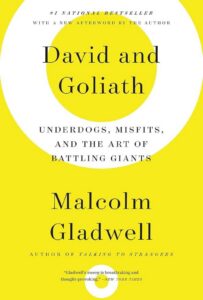
Their wisdom has been swimming through my mind since, marinating with the contents of the perfect companion piece to Brilliantly Wired: Chapter Four of Malcom Gladwell’s David and Goliath: Underdogs, Misfits, and the Art of Battling Giants.
As soon as the panel discussion was over, Tim approached me with four identical, yellow paperbacks in his hands. I was a bit perplexed, and still wide-eyed from panel-moderation adrenaline, when he gave them to me with the instruction to “read the dyslexia chapter.”
So, on Saturday morning, feeling the crisp new fall air through my open window, warm cup of coffee in my non-book-holding hand, I did. While I didn’t intend to read the chapter aloud, my husband Luke ended up hearing the majority of it. I couldn’t stop myself from sharing what I was learning! Now I’m doing it again.
The Theory of Desirable Difficulty
The “dyslexia chapter” is actually titled “The Theory of Desirable Difficulty: You wouldn’t wish dyslexia on your child, or would you?” As a childless neurodivergent woman myself, I have wondered about the ethics of my (no-longer) secret wish that my future children will be neurodivergent.
While we know the pain that children with neurodivergence tend to experience in a society and school system that does not understand them, we also know that many of humanity’s greatest thinkers, dreamers, and artists were or are neurodivergent. Chapter Four offers a few kernels to help us understand why.
The chapter dives into what psychologists Dr. Robert Bjork and Dr. Elizabeth Bjork call “desirable difficulties.” Gladwell offers an intriguing illustration of the concept. In summary, university students were given a 3-question intelligence test called the Cognitive Reflection Test (CRT). The average score rose significantly when the test was made more difficult by printing the questions in a “font that was really hard to read.” They squinted, reread the sentences, and were forced to apply more of their cognitive resources, and MIT students’ scores rose from 2.18 to 2.45 (out of 3). This added difficulty turned out to be desirable, for students thought harder and performed better.
A study by Professor Julie Logan found that around one third of highly successful entrepreneurs were dyslexic. Applying what we learned from the “lighten and italicize the font” study above, dyslexia may be considered a desirable difficulty, allowing these successful entrepreneurs to succeed not despite, but because of their disorder.
Boies and Other Dyslexics
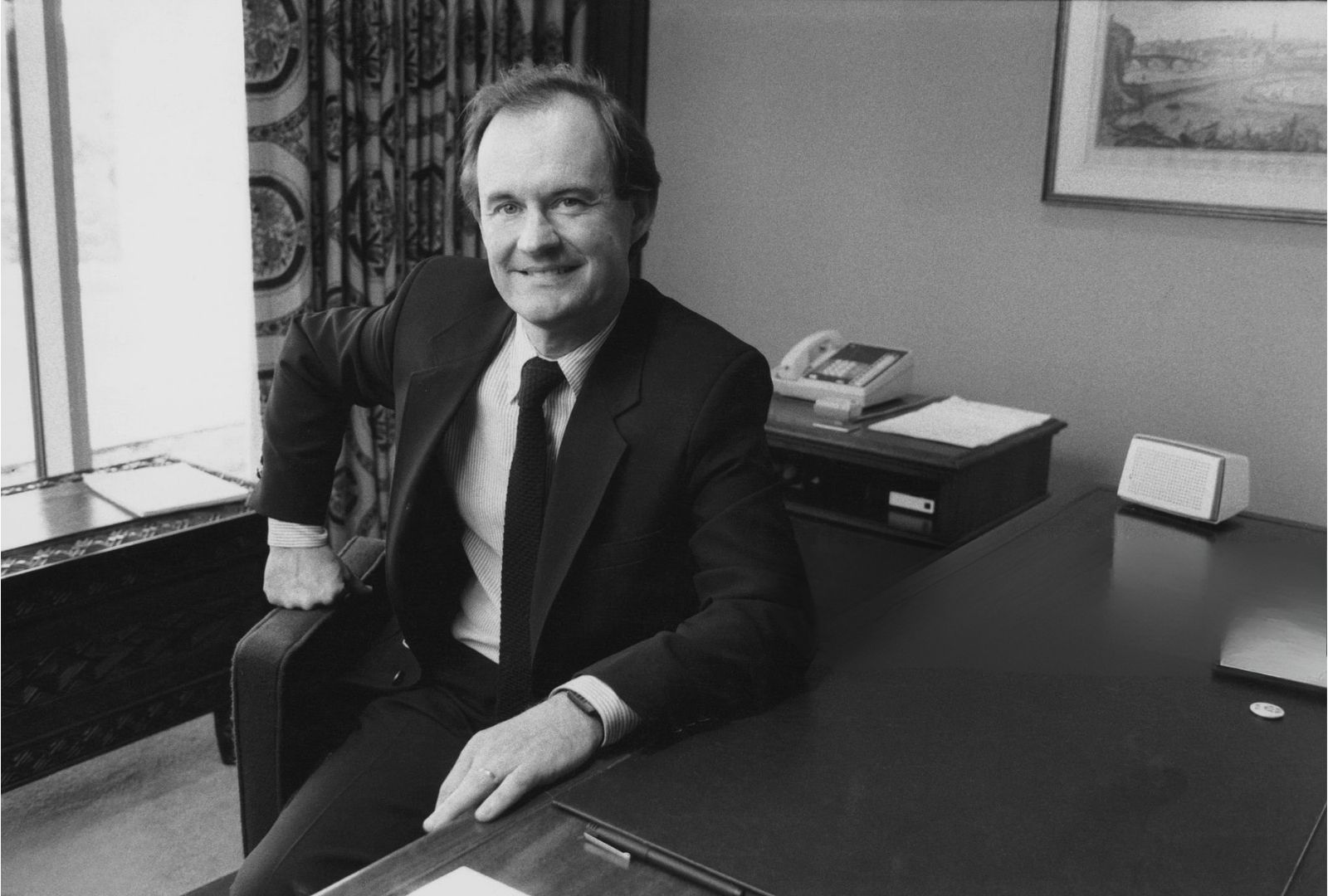
Progressing through the chapter, Gladwell told the story of David Boies, a small-town dyslexic boy who became one of the most famous trial lawyers in the world. Struggling to read throughout primary and secondary school and in college, he became an excellent listener. In court he could analyze small details such as his opponent’s tone, pacing, and pauses, and use those details to get his opponent to concede key elements of the case. How could I not be reminded of Tim, our panelist? Tim spoke of using his listening skills and excellent memory to find connections and hold together complex information. He draws on this information as he connects current issues and previous challenges, and recommends resources from among his team’s skills and networks.
Gladwell goes on to tell the stories of several other wildly successful dyslexics: Brian Grazer, a Hollywood producer responsible for Apollo 13 and A Beautiful Mind among other hits. Grazer learned the art of negotiation when, growing up, he convinced teachers time and again that his D grade should be a C, his B should be an A. This element of disagreeableness was critical to Grazer’s success.
Similarly, IKEA founder Ingvar Kamprad, took countless social risks and thought outside the box to create and manufacture furniture in flat boxes, offering cheaper and simpler shipping. My favorite might have been Gary Cohn, the president of Goldman Sachs, who lied his way into his first job on Wall Street by sharing a cab with a well-dressed man leaving the old World Trade Center complex; Cohn convinced the businessman that he knew all about options, the subject of the man’s new business. The important part of his story, though, is that after the initial fib, Cohn read everything there was to read on buying and selling options. It takes him around six hours to read twenty-two pages, and he would reread each sentence of the options book until it made sense to him.
Brilliantly Wired + Desirable Difficulty
My quick summaries do not do these innovators justice, and if you want to learn more about them, I stand by Tim’s recommendation: Read Chapter Four of Malcom Gladwell’s David and Goliath! In the meantime, I want to make some connections.
After their years spent struggling through school despite their obvious intelligence, Adam and Allison both built successful careers around their strengths. Adam invented the technology that put video on our phones! Allison, after a successful career as a birth doula, learned the technical aspects of photography. Now her techniques and expertise are helping shape photography standards for global companies. Would Tim, Adam, or Allison have said that their learning disability was a “desirable difficulty” growing up?
Given their answers to my questions, I don’t think so. But what about now? One of our students ended the Brilliantly Wired panel discussion by asking, “What would you tell your 11-year-old self, now that you know what you know?” Here is what they had to say:
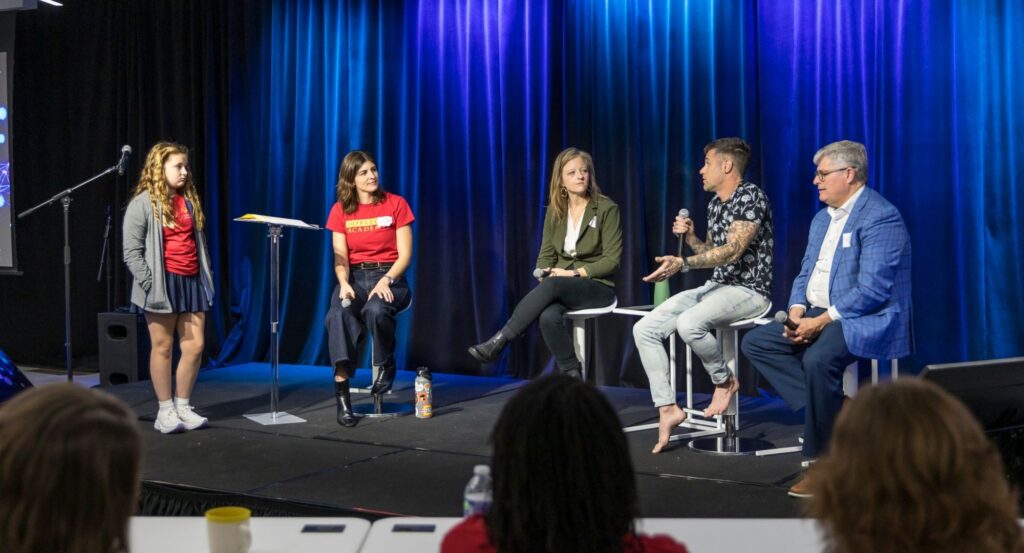
Adam: There is a reason why you’re having a hard time. And actually, that thing that is the hardest to overcome, will end up being your best asset when you grow up. So lean into it, and love yourself, and accept yourself for exactly how you are, period.
Tim: Dyslexia is one of the greatest gifts your parents could give you, so take that gift and do amazing things with it.
Allison: I’ve got a lot of ideas, and I’ve always been exactly who I am. I fought against it, and that’s what made it harder. Fighting against myself is what made it feel that everything about me that was too chatty, or too this or too that – was bad. There was a lot of self-blame.
Then I let my idea push me to create the Trixie Lou Project. I love to chat and connect with people, and I see things differently, I can be uncomfortable, and I can do stuff other people don’t do, in a way they don’t do it. I just had to let it be true and see what happened. But my career, my family, and my life are fundamentally better for letting myself be weird and admitting it.
Dyslexic or not, does this advice not apply to us all? I write this blog post with gratitude to our panelists, who, by sharing their stories, gave us hope and inspired us all. Brilliantly Wired was filled with dyslexic and other neurodivergent people (diagnosed or not!), coworkers and friends of dyslexic individuals, teachers, parents, and grandparents of dyslexic children who all heard the same message: Your challenges become your assets, your disabilities are your gifts, and the sooner you learn to embrace that, the better you’ll feel.
Now please excuse me while I write those affirmations on post-it notes and cover my house, car, and office with them.
By Gabi Guillory Welsh, Director of Therapeutic Language and Literacy